
[
MAINTENANCE LOGS
]
Care and Repair as Climate Action
The lowest-impact garment is often the one already owned
The Extension Principle
In a linear economic model, a garment is considered "used" once it reaches the consumer. In a circular model, that is merely the beginning of the deployment phase. Extending the active life of a garment by just nine months can reduce its carbon, waste, and water footprint by up to 30%. When viewed through this lens, maintenance is not a chore—it is a carbon-mitigation strategy.
Routine Technical Maintenance
Treating your wardrobe as hardware requires shifting away from "over-maintenance." Excessive washing is the primary driver of fiber degradation and shedding.
Targeted Cleaning: Spot-clean whenever possible. The objective is to preserve the structural integrity of the fibers by limiting exposure to agitation and chemical detergents.
Temperature Protocols: Utilize cold-water cycles to prevent heat-induced damage to protein fibers and to lower energy expenditure.
Air-Curing: Direct sunlight can bleach natural dyes and weaken organic fibers. Utilize passive airflow in shaded, low-humidity environments to refresh textiles.
Mechanical Intervention: The Repair Loop
Repair is an act of reclaiming ownership over the production cycle. We classify repairs into two categories:
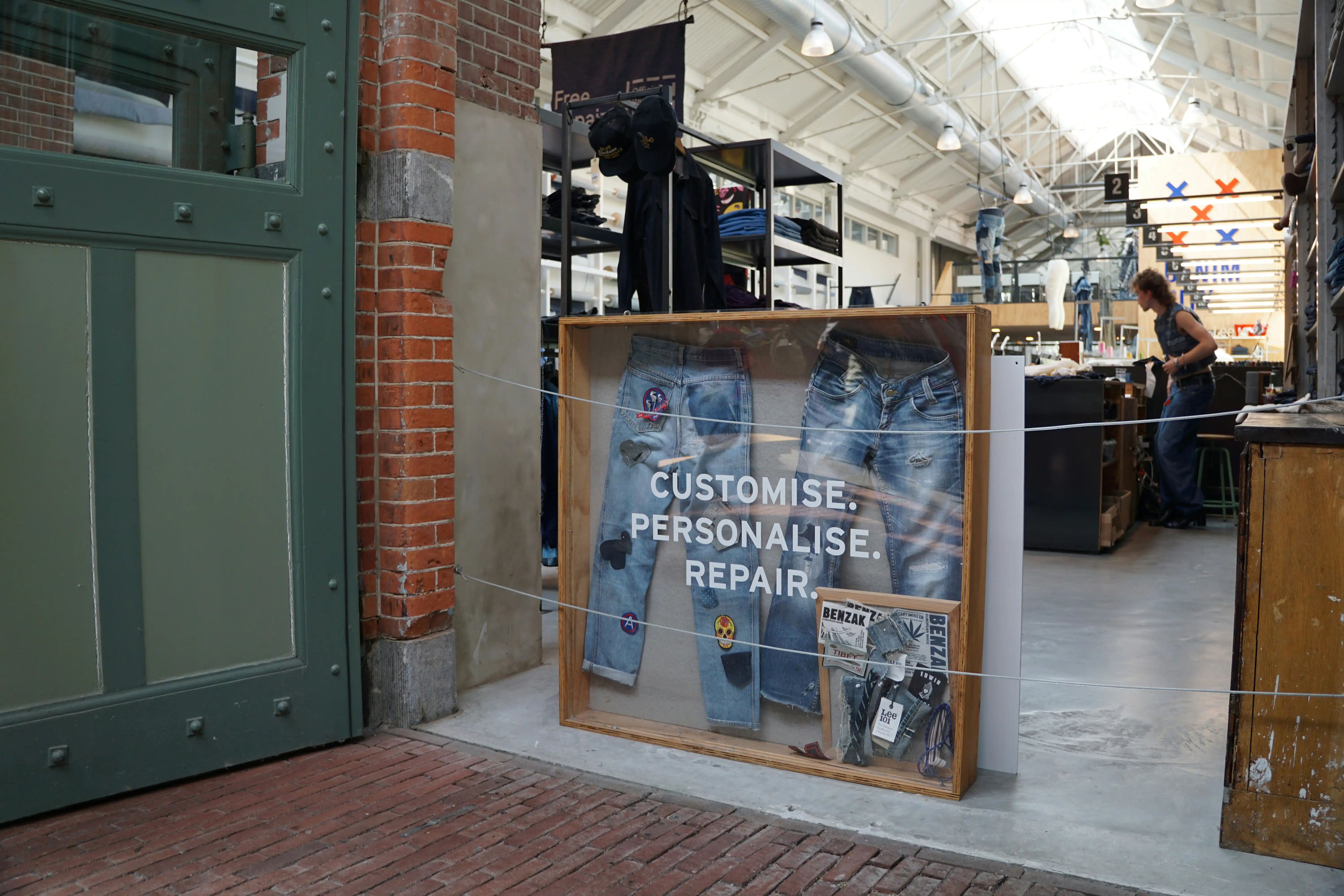
Invisible Restoration: Maintaining the original aesthetic by matching thread tension, needle gauge, and stitch density. This preserves the garment's design intent.
Visible Engineering: Reinforcing stress points (elbows, inseams, pockets) with contrasting high-tensile thread or patches. This acknowledges the garment’s history of use while bolstering it for future cycles.
The "End-of-Life" Buffer
Even with meticulous care, materials eventually reach a point of mechanical failure. At this stage, circularity requires "upcycling" or "downcycling." If the fiber is pure (e.g., 100% cotton), it can be reclaimed as raw material for new textiles or composted in a controlled industrial setting. If the piece is a blend, it must be diverted to specialized recycling streams, ensuring that the material remains in the system rather than entering a landfill.
A Commitment to Resilience
Climate action is often framed as a future-facing endeavor, but the most immediate impact resides in the present. By choosing to repair rather than replace, you disrupt the demand for new resource extraction. A repaired garment is a physical testament to a shift in values: prioritizing structural resilience over ephemeral trends.